

ST. GEORGE, Utah (AP) — Utah is one of the states free from a White Nose Syndrome epidemic found in bats but nationwide, it is becoming an increasingly larger problem.
Since WNS attacks bats during hibernation, the bats spend precious energy awake and using up their food stores. This starves them to death in many cases. There is no known cure, and it has a 90-100% fatality rate. Other states free of WNS include Nevada, Idaho, Colorado, Arizona, Florida and Louisiana.
WNS spreads through pores that travel on human’s shoe wear and gear they might bring into caves. It also spreads through bat-to-bat contact, spreading rapidly since fungus thrives in cold, dark places like caves.
“WNS is not that big of a deal in places that have already been affected and it seems to hit certain species of bats harder than others,” said Kimberly Dickerson, WNS regional coordinator for the Lakewood, Colo.-based Mountain-Prairie Regions of the U.S. Fish and Wildlife Service.
Climate plays a large role in the spread of WNS and places like Florida have no reported cases because they don’t have caves where bats hibernate. Utah doesn’t have an especially large number of caves. In certain areas of Washington County, it tends to stay warm year-round. This enables bats to have a shorter hibernation period in many cases.
“There are probably around a dozen bat species in Washington County,” Keith Day, a wildlife biologist, said.
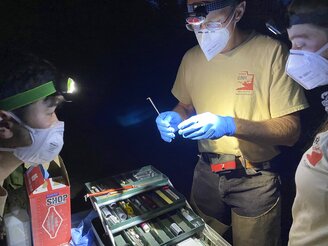
Eighteen bat species reside in Utah and the Division of Natural Resources surveys the local bats in rotation every three years. Day has been doing bat surveys in Utah since before 2009 when the rotation started. He said he brings out interns from the DNR to camp and catch bats in soft netting so that they can take measurements and monitor the bat populations.
Day and his team look for WNS and there is a large concern that it will spread to Utah, so monitoring the bats in different areas is vital.
“Most bats are inactive in the cold weather or wintertime, or mostly inactive. There is bat activity year-round down here in Washington County. It’s warm enough that they can be active year-round mostly spring, summer, and fall,” Day said.
Places with water attract large numbers of insects and with Utah being a dry climate, it’s also a prime area for bats to visit during dusk. Day said that all the bats in Utah are insectivorous.
There are caves and mines where bats like to hibernate. In southern Utah, bats can be found in the Red Hills Desert Reserve north of St. George, Ivins, northwest of St. George and Quail Creek State Park near Hurricane.
“The caving community is working hard to make sure gear is cleaned off and the WNS spores aren’t moving. But you can’t disinfect all the equipment,” Dickerson said.
Though bats spread WNS by being near each other during hibernation and flying to different locations, humans play a key role in the spread of WNS. This is particularly true in national parks and caves frequented by tourists.
As resilient as these fungi spores are, they can stay on caving equipment, clothes and shoe wear through plane rides and transfer to a new location. It’s essential that when caving or going to an area with known bats to clean off equipment and clothing as soon as possible to eliminate the spread of WNS.
One concerned citizen even took his idea to implement cave management on the Arizona Strip to the local government but has been turned down.
Spotts said he wants to see the states that have not have suspected or confirmed cases be more proactive in the prevention of WNS.
Though bats tend to be associated with horror movies or vampires, their role in pollination and keeping mosquito populations to a bearable amount is integral. Without bats, Utah farmers would have more pests eating their crops and they would lose a pollinator.