

SALT LAKE CITY (AP) — Utah will soon join the growing list of states transitioning away from treating the coronavirus pandemic as a public health crisis and instead shift to a policy focused on prevention and managing risk.
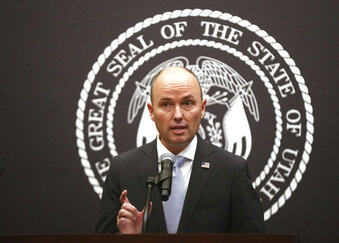
Friday, Utah Gov. Spencer Cox said the Beehive State will move to a “steady state” model on March 31, phasing out mass testing sites and reporting COVID-19 case counts on a more infrequent basis.
“Now, let me be clear, this is not the end of COVID, but it is the end — or rather the beginning — of treating COVID as we do other seasonal respiratory viruses,” Cox said.
The shift parallels actions planned in other states including California, where Gov. Gavin Newsom announced yesterday that it would adopt an “endemic” approach to the coronavirus as part of an attempt to return to normalcy.
As the omicron variant-fueled surge subsides and hospital capacity concerns diminish, politicians are signaling to their constituents that they plan to approach the pandemic as a part of everyday life, while acknowledging that surges and variants may arise in the future.
With widely available tools like at-home tests, antiviral treatment and wastewater surveillance, Cox and health officials are confident that Utah can keep case counts and hospitalizations at manageable levels and monitor for new spikes, variants and outbreaks.