

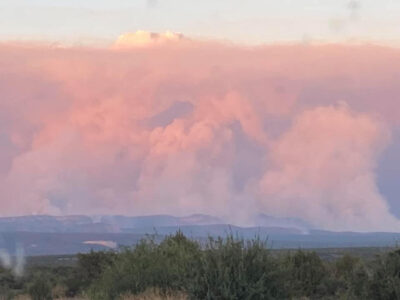
FLAGSTAFF, Ariz. (AP) — Dozens of wildfires were burning in hot, dry conditions across the U.S. West, including a blaze touched off by lightning that was moving toward Flagstaff, Ariz.
Intense heat is hampering firefighting efforts more broadly than expected. Conditions are expected to become more moderate in the coming days. The National Weather Service noted it could bring uncertainty for fire crews.
“The humidity and the possibility of some scattered rainfall is a good thing,” said meteorologist Andrew Taylor. “The lightning is not a good thing.”
In California, firefighters still faced the difficult task of trying to contain a large forest fire in rugged coastal mountains south of Big Sur that forced the evacuation of a Buddhist monastery and nearby campground.
In New Mexico, lightning-sparked blazes have been scorching the southern part of the state where a large portion of the Gila Wilderness remains closed, and fire officials are closely watching the Gila Cliff Dwellings National Monument.
More land has burned across Arizona so far to date with new wildfire starts quickly shifting resources. While humans are to blame for an overwhelming majority of wildfires, lightning started a 31-square mile (80-square kilometer) blaze west of Sedona that was moving toward Flagstaff.
A top-tier management team had been ordered to oversee the blaze that’s burning in grass, juniper, chaparral and ponderosa pine.
Some campers already evacuated, and residents of rural areas have been told to prepare to evacuate on a moment’s notice, said Coconino County sheriff’s spokesman Jon Paxton.
If the fire continues its northeastern push, hundreds of people in Flagstaff — a college city about two hours north of Phoenix — also could be impacted, Paxton said.
Fire officials were mapping out a plan to starve the so-called Rafael Fire of fuel as it moves through rugged terrain, canyons and wilderness, said fire information officer Dolores Garcia. As of Monday, it was moving parallel to Interstate 40 along the Coconino and Yavapai county lines.
The 2,812-square-mile (7,283-square-kilometer) Coconino National Forest, a popular area for camping, hiking, boating and fishing, is shutting down Wednesday because of concerns it won’t have enough resources to respond to any future wildfires.
The forest has only partially closed in recent years because of wildfire danger.
“We have limited resources, and we’re tapped right now,” said forest spokesman Brady Smith.
Arizona is at the highest level of preparedness for wildfires. A large wildfire burning near Superior, about 60 miles (97 kilometers) west of Phoenix, was nearly 70% contained Monday. The 282-square-mile (730-square-kilometer) blaze was human-caused.
Residents near the small communities of Pine and Strawberry remain evacuated because of another wildfire that has hopped among treetops, with flames jumping ahead carried by wind. Some local roads also were closed.
In Utah, several wildfires were burning in bone-dry conditions. The largest near Enterprise forced evacuations over the weekend. Homeowners were allowed to return as containment reached 50%.