



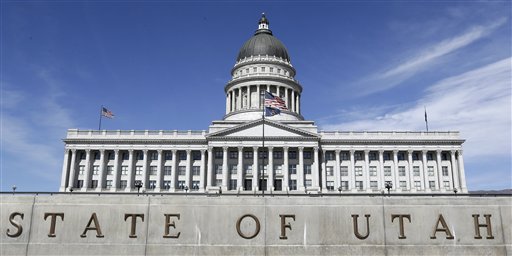
SALT LAKE CITY (AP) — Utah lawmakers have taken a first step toward banning police officers from placing their knees on the necks of people being detained in the type of chokehold used by a Minnesota police officer in the death of George Floyd.
The Utah Legislature’s Law Enforcement and Criminal Justice Interim Committee unanimously approved a bill Tuesday opposing the maneuver as a valid form of restraint, The Salt Lake Tribune reports.
The full Legislature is scheduled to consider the measure during a special session Thursday.
Under the legislation, police officers would be investigated by a county attorney for using a prohibited knee-on-neck chokehold.
The legislation also would prohibit Utah’s police academy or other law enforcement agencies from teaching officers how to use chokeholds, carotid restraints or any act impeding breathing or blood circulation that is likely to produce a loss of consciousness.
The bill did not propose an outright ban on officers using chokeholds.
The bill is only the “beginning of the conversation,” but legislators recognize the issue as a matter of human rights rather than partisan politics, Democratic Rep. Sandra Hollins said.
“We recognize we had time constraints in getting this done, but we all agreed that the kneeling on someone’s neck and constricting their airway is inhumane,” Hollins said.
Floyd, a black man, died May 25 after a white Minneapolis police officer pressed his knee on Floyd’s neck while he was handcuffed and lying on the ground.
Floyd was pinned to the pavement for what prosecutors say was 8 minutes, 46 seconds — a number that has since become a rallying cry among protesters across the U.S. and around the world against police brutality and racial injustice.