


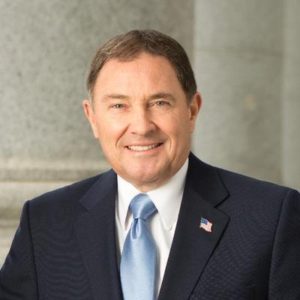
SALT LAKE CITY-Wednesday, Utah Governor Gary Herbert addressed the media from the State Capitol in the latest briefing during the coronavirus task force series that was implemented March 30.
Herbert confirmed that he has resisted state lock-down calls because he makes decisions based on “good data” as opposed to “politics or whims.”
With various school districts having Spring Break (Wasatch School District among them, incidentally) and the Easter holiday, Herbert asked everyone to resist the urges to recreate in large groups far away from their homes.
However, he did say “essential travel” is acceptable during this time as well as at any other times during the installment of his directive.
Herbert defines “essential travel” as going grocery shopping, going to restaurants to go through drive-thrus or to get takeout, getting gasoline for vehicles and obtaining supplies for work. Other acceptable travel, Herbert continued, includes taking children to daycare or a pet to the veterinarian, if applicable.
Herbert did specify that, if at all possible, he prefers that people telework.
Herbert also said that outdoor recreation near the homes of Utahns is acceptable, as long as social distancing regulations are kept.
This means that, of course if social distancing regulations are adhered to, Wasatch County residents may go to the state parks in the county: Wasatch Mountain State Park and Jordanelle State Park.
Herbert also said the unemployed are all receiving a $600 boost from the federal government. These funds are specifically earmarked to help Americans weather the storm, he continued.
A travel declaration has also been issued for all visitors to Utah via automobile or plane.
This was further explained by Carlos Braceras, the P.E. Executive Director of the Utah Department of Transportation.
Braceras confirmed that this consists of areas in the Salt Lake City International Airport where passengers get off of their planes and at various ports of entry in the state where drivers of vehicles will receive texts from UDOT requiring them to go to the Web site entry.utah.gov. Visitors who have flown in will receive passing cards instructing them to visit this Web site.
When there, they will give a self-declaration concerning any symptoms of COVID-19 they may have or anything else affecting them pertaining to the disease.
The ports of entry that this will be used at include Interstate 15 at both the north and south entrances to the state, Interstate 80 at both the east and west entrances to Utah, Interstate 70 at the Colorado border, Interstate 84 at the Idaho border, U.S. Highway 191 at the Arizona border and U.S. Highway 89 at the Arizona border.
Braceras confirmed there are no plans at this time for the same protocol to be followed at the St. George Regional Airport but this will be reassessed at a future date.
Braceras also said that “this information will be kept secure and give UDOT the ability to contact those who need to be contacted” for testing purposes.
If they have any symptoms of COVID-19, their whereabouts can be traced so that officials know everywhere they have been previously.
Salt Lake City Mayor Erin Mendenhall shared some thoughts on the airport and stated “this is not the time for the state to let its foot off the gas” concerning the importance of quelling the spread of COVID-19.
In taking time for some questions, Herbert concluded his comments by reminding Utahns to “use good common sense.”
State epidemiologist Dr. Angela Dunn then addressed the media. She reported that Utah currently has 1,846 cases (+108 from Tuesday) of COVID-19 with 36,116 Utahns having been tested (an increase of 1,469 from Tuesday) and 158 hospitalizations have occurred.
Dunn said that testing, social distancing and contact tracing are all big factors in helping Utah overcome this disease.
She confirmed that Intermountain Health Care is checking to see if hydroxychloroquine has sufficient efficacy to become a trustworthy form of treatment.
Dunn also spoke of certain circumstances wherein unexposed patients at medical facilities have had to be transferred to other facilities to ensure their protection.
In closing, Dunn said “the public should be focused on what’s going on now and stopping the spread.”
The Utah coronavirus task force will commune again Thursday at the State Capitol building.