



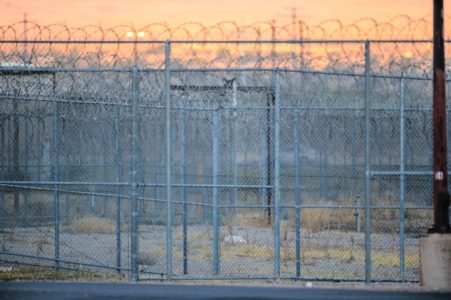
SALT LAKE CITY-County jails in Utah are seeking for the Utah Supreme Court to analyze a case where they seek to release more inmates because of COVID-19 and rule in their favor.
Civil rights groups engaging in this battle say they are content with the precautions sheriffs have detailed in court filings.
They have also asked the Utah Supreme Court to dismiss counties from their lawsuit as they focus on the state’s prison system.
However, jails are resisting what Salt Lake County is calling “a last-minute attempt to deflect from the petition’s legal and factual deficiencies.”
If this request is granted, it would allow the groups to sidestep any analysis by the court per an argument field in court papers by Salt Lake County District Attorney Sim Gill.
The ACLU of Utah, the Disability Law Center and the Utah Association of Criminal Defense Lawyers filed the petition with the state’s high court in April. This was part of a national effort to shrink incarcerated populations who are seen as vulnerable to the virus because of their cramped quarters.
At the Purgatory Correctional Facility (the Washington County Jail) of Hurricane, an inmate who died there Monday will be screened to see if he had COVID-19.
67-year-old Russell Dwain McGonigle was found unresponsive at the jail per Washington County Chief Deputy Jake Schultz.
McGonigle had several health conditions and was being detained in a special medical cell. He had been scheduled to meet with a doctor later that day.
Magistrate Judge Paul Kohler of St. George found McGonigle, who was facing a federal charge of possessing child pornography, had violated the terms of his release ahead of trial by possessing adult pornography and committing an act of voyeurism at his nursing home. This allegation was denied by his attorney, Adam Bridge.
In March, Kohler ordered that McGonigle remain in custody “until other living arrangements can be made,” as court records attest.
Bridge said by that time the nursing home had evicted his client.
More than a week earlier, a man booked into Purgatory on minor offenses late on May 7 tested positive for COVID-19.
This man revealed he had been in contact with someone who had the virus, an admission he failed to make at intake and revealed only once in the jail, Schultz said.
The inmate was then placed in a negative-pressure cell as his test was pending.
The next day, he was released on a judge’s order to quarantine at home in Las Vegas.
Schultz said no other inmates or employees at the jail had tested positive.
Gill is defending Washington County in court and said its efforts to head off virus risks were “numerous and successful.”
However, Gill said, the groups sued before they had all the information. This resulted in needless alarm for inmates, first responders and jail employees, he asserted.
The advocates said they took legal action because jailers refused to give any information concerning sanitation measures, rates of confirmed cases and tests among those incarcerated in the Beehive State.
In Friday’s court filing, Gill pushed back on the allegation, saying the only interruption in free flow information from Salt Lake County and Purgatory resulted in this litigation.
Gill, along with attorney Frank Mylar of Salt Lake City, who is representing Utah’s 21 other counties, asserted they wanted this case tossed with prejudice. This means it cannot be filed again at a later date.
Mylar has said his clients have spent time and money fighting the case. They, therefore, “want a decision that will provide much-needed clarity of the law going forward.” This also entails a chance for them to recoup the costs of defending themselves.
The advocacy groups sought the release of those behind bars who do not pose a public safety risk. This includes older inmates, those with existing health problems, and others whose sentence was set to expire within the next six months.
The organizations also want the appointment of a “special master,” or a point person to oversee these releases.
In court papers, lawyers with the Utah Attorney General’s Office stated this correctional system has taken steps to prevent the spread the virus from entering the prison or spreading.
This entails such measures as temperature checks for each employee, suspensions of visitation and volunteer work and immediate isolation of any inmate showing symptoms.
The prison has allowed more than 80 inmates to go home because they were within three months of their release date.
Groups say the existing process to secure compassionate release is slow and difficult for those who do not have an attorney.