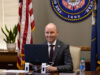


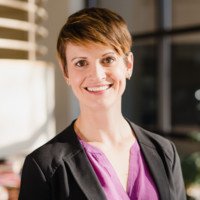
SALT LAKE CITY-Monday, Utah state epidemiologist Dr. Angela C. Dunn spoke to Utah media at the State Capitol building concerning the latest updates on the COVID-19 briefing.
Dunn confirmed that the positive test rate consistently remains around 5 percent.
She also stated that the relatively low death rate (13 deaths have occurred in Utah per Monday’s updated results) is because of the Beehive State’s younger populations. This, she confirmed, gives “less risk for severe outcomes.”
Dunn said that based on knowledge already obtained, the medical staff of the state should not be overwhelmed but, she continued, “we are always preparing for worst-case scenarios.”
Dunn also confirmed, when asked if Utah plans to install a mandatory stay-at-home policy, that such decisions will be based on data and recommendations from local public health offices.
This mirrors previous statements Utah Governor Gary Herbert made last Friday.
She did say that the directive makes things implicitly clear that Utahns should only travel when it is absolutely necessary.
Sunday, reports from medical practitioners in Utah emerged on Twitter that the state was hoarding hydroxychloroquine, an immunosuppressive drug and anti-parasite that has proven successful in treating COVID-19 throughout the country.
On his Twitter account Sunday evening, Herbert called this a false accusation, sentiments that Dunn echoed during her remarks Monday.
When asked about rural Utah and how tests for COVID-19 were proceeding in these areas, Dunn said mobile options may be employed to help get the tests done. She also confirmed that the same amount of equipment is being sent to these areas as the Wasatch Front.
Dunn then alluded to the model used by the University of Washington which can be found at covid19.healthdata.org, and said this is based on case counts. This, she said, is why Utah’s predicted deaths remain at a relatively low level at this stage.
She continued by saying there is a 3-day delay in negative results whereas the turnaround for positive tests occurs within 24-72 hours.
In this vein of thought, Dunn said that if results should become more propitious, the caution is that restrictions could be lifted too early.
If this is true, a surge in cases could be seen in the state. Therefore, Dunn said, the state will continue to handle things cautiously.
When asked about how the death totals are obtained, Dunn said the Utah Department of Health relies upon hospitals to report deaths.
She did say swab tests are going well but a shortage in supplies is looming, likely by the end of this week. More supplies have been ordered and she expects them to arrive shortly.
Throughout her remarks, Dunn also said that the state recommends only testing symptomatic people at this stage.
To the state of Utah, she said, a positive test is a true positive and, in turn, a negative test constitutes a true negative test.
Should asymptomatic people be tested, then the false positives and false negatives can come into play, throwing things off, she confirmed.
Dunn also advised people to beware of scams in Utah as UDOH will never ask for financial information, one’s social security number or money. If someone asks for these things, she said, that is evidence it is a scam.
Dunn then confirmed she will address the media Tuesday for another briefing.